
11/20/22 UPDATE: Cephalotus are OUT OF STOCK until further notice.
Cephalotus follicularis is found only in one place in the world: the southwestern coastal regions of Australia. Like most carnivorous plants, this plant only grows in swampy or boggy ground.

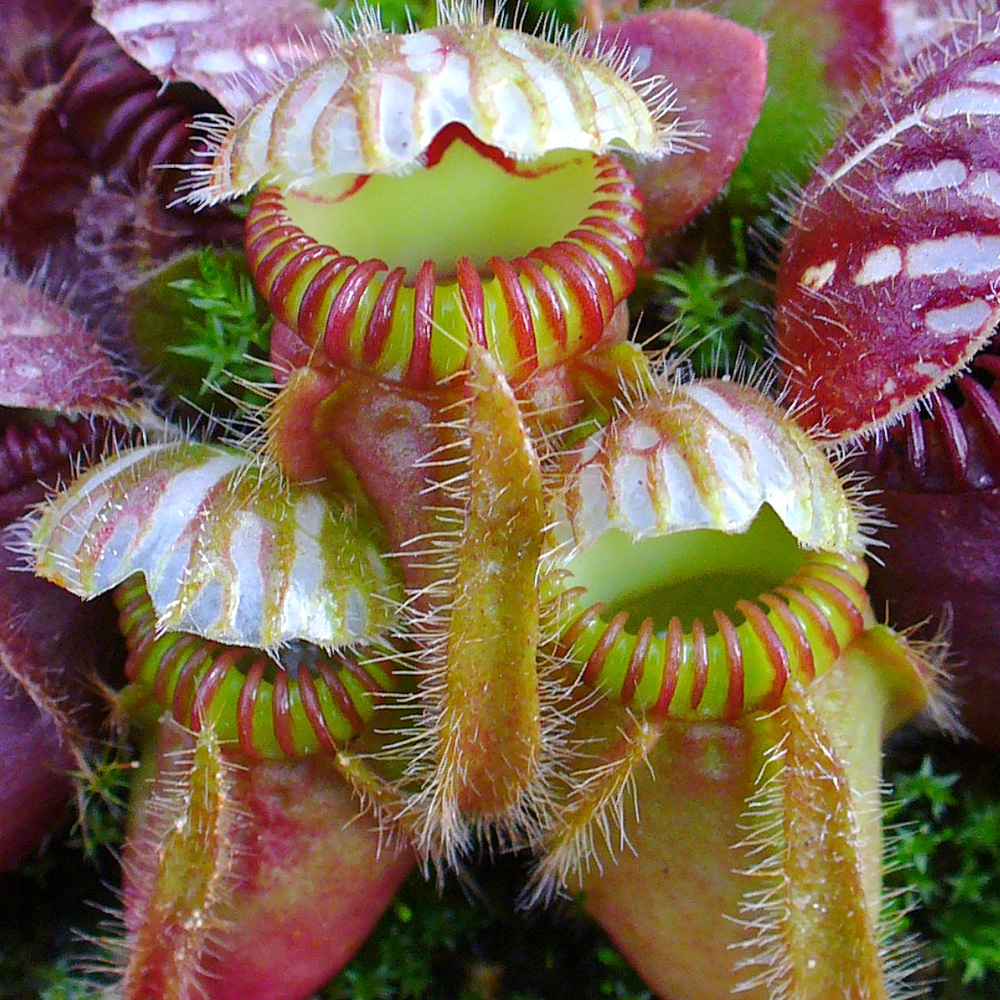
Plant shown in the photograph is a representative of the species and does not show the plant that will be purchased.
Cephalotus follicularis is found only in one place in the world: the southwestern coastal regions of Australia. Like most carnivorous plants, this plant only grows in swampy or boggy ground. There are two common names used for this plant, the (Western) Australian Pitcher Plant and the Albany Pitcher Plant. Cephalotus come from the Greek word "kephalotus", meaning headed this is referring to the anthers of the stamen. The second part "follicularis" referring to a small bag or pod the leaf trap.
This plant has two types of leaves. The first type is oval-shaped and is non-carnivorous, and these are produced in the spring. Then around September and October the carnivorous leaf grows. The pitcher (trap) looks very different from the flat, non-carnivorous leaf. It grows up to 5 cm (2 inches) in size see drawing and photos below. Like many carnivorous plants, it uses nectar glands, color and tricks to get its prey. The trick part is the use of translucent grooves on the lid that over hangs the trap. The nectar glands are around the mouth of the trap on sharp, inward pointing ribs, which also stops the prey from coming out after falling into the liquid inside. Another feature of Cephalotus is an overhanging lip or collar on the inside of the pitcher. This stops any insect from crawling out, not only due to its shape but also its slipperiness. The inside of the trap is light green in color, whereas the outside is a deep maroon in a mature trap. Digestive glands are found in two areas inside the pitcher.
Plants grown in full sunlight are smaller than those grown in shade or indirect sunlight, but they have a beautiful red or maroon coloration, which is absent on those grown in diffuse light. To get large plants with red coloration, grow the plants in indirect light to obtain robust plants and then, gradually expose plants to stronger light to develop the dramatic coloration. When growing Cephalotus under artificial lights start with 1000-1500 foot-candles with a 12-16 hour day. If you don't have enough access to sufficient sun, purchasing a plant light or a grow light will work wonders.
Water: Do not allow Cephalotus to dry out completely. They benefit from moist media and occasional flooding to wash away any accumulated salts. Use relatively clean water such as rain, distilled or purified water. Tap water can be used in many localities if the water is low in salts. Low levels of chlorine do not seem to be a problem.
Humidity: This should be from about 65-90%, with 85% being close to optimal.
Temperature: Range from 38-95°F. Plants can survive a light frost. Cephalotus will grow well at constant temperatures of 70-85°F the year round. In their native habitat, temperatures are lower in winter than in summer.
Planting Mixes: The potting media should be peat moss or sphagnum moss or a combination of both. Care must be taken when repotting to handle the roots and rhizomes carefully avoiding any damage to either. If dividing the plant is required then the media should be drenched with a good fungicide (preferably systemic) after repotting. Once a plant is established it can be quite hardy and tolerate a wide range of conditions but to maintain good growth the best conditions possible are required. A plant can grow from a minute division to a 15cm cluster of 5cm traps in under 2 years but this is rare and can only occur in perfect houses
Feeding: Feeding is usually not needed, but adding a few small insects every few months can be beneficial. You may use very diluted Miracid fertilizer in the pitchers. Use 1/4-1/3 teaspoon of Miracid per gallon of water and put about a tablespoon of this solution in a few pitchers every month or so. Do not fertilize the roots.
Joseph Gomez - July 12, 2021
Brandy Panega - June 15, 2022
John McQuire - March 31, 2018

 I just received my latest addition to my collection of carnivorous plants and I got to say, I am very impressed. I have ordered from other suppliers and yours has clearly shown the most care in selecting healthy plants, and preparing them for shipping. The potted plants are in very good shape, and are very healthy. The "bare root" plants came wrapped in a moist paper towel / bag supporting the roots and I will NOT have to spend weeks / months nursing them back to good health. All the plants I ordered are in good shape and ready to join the others in my collection. The butterwort looked a little stressed and will need a little TLC, but I know it will be just fine. You even went the extra mile to include a seasonal growing and winter care sheet. I look forward to future business and will defiantly recommend you guys to others. Thanks again.
Joe from Iowa - August 9, 2014

Copyright © 2003 - 2024, BugBitingPlants.com - All Rights Reserved

